Nature-Inspired AI Research Lab — Building Foundation Models Through Evolutionary & Swarm Intelligence
The consensus on Sakana AI: A once-in-a-generation research team rethinking AI from first principles. Choose Sakana if you want to work alongside the co-inventor of the Transformer on genuinely novel approaches to intelligence — from Tokyo.
Founded in 2023 by David Ha (ex-Google Brain) and Llion Jones (co-inventor of the Transformer architecture at Google), Sakana AI is a Tokyo-based research lab taking a fundamentally different approach to AI. Instead of brute-force scaling, they draw inspiration from nature — evolutionary algorithms, swarm intelligence, and collective behavior — to build foundation models. The result is a small, elite research team working on problems nobody else is tackling, backed by $412M in funding from the world's top investors.
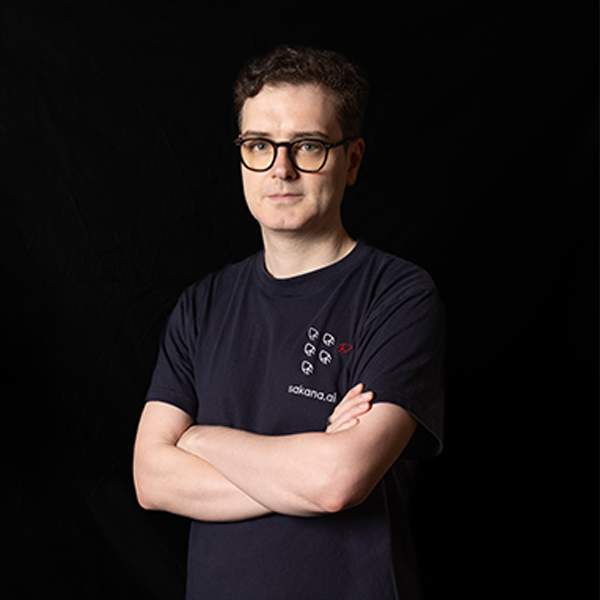
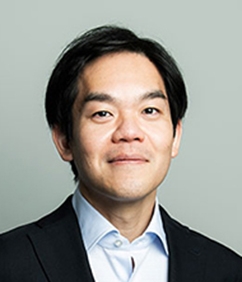
Sakana AI's founding team includes some of the most consequential researchers in modern AI history. This isn't a team that read the Transformer paper — they wrote it.
David Ha spent years at Google Brain leading research in Tokyo, where he pioneered work on neuroevolution and creative AI systems. His research on World Models and weight agnostic neural networks has been widely cited across the ML community. At Sakana, he's applying nature-inspired principles to build AI systems that are more efficient, adaptive, and robust than brute-force approaches.
TIME100 AI 2025 · Ex-Google Brain Japan Lead · U of Toronto
Llion Jones is one of the eight co-authors of "Attention Is All You Need" — the 2017 paper that introduced the Transformer architecture and fundamentally changed AI. Every major language model (GPT, Claude, Gemini, Llama) is built on his work. After a decade at Google, he co-founded Sakana to explore what comes after the Transformer — using evolutionary and biological principles to discover the next paradigm in AI.
Co-author 'Attention Is All You Need' · 10+ years at Google · TED Speaker
Ren Ito brings deep operational expertise and a strong understanding of the Japanese tech ecosystem, bridging the gap between cutting-edge AI research and real-world enterprise deployment. His work has been instrumental in securing Sakana's partnerships across Japan and positioning the company as a key player in the country's AI strategy.
Operations leader · Built Sakana from 0 to 150 employees
In a world of me-too AI startups, Sakana AI stands out with a genuinely differentiated approach to building intelligence.
While everyone else scales compute, Sakana draws from evolutionary biology, swarm intelligence, and collective behavior to build AI that's more efficient and adaptive. This isn't marketing — it's their core research thesis.
When your CTO literally co-invented the architecture that powers every major AI model, the research bar is as high as it gets. Sakana attracts talent that wants to work on what comes next.
Tokyo offers world-class infrastructure, a thriving tech ecosystem, and a cost structure that stretches $412M much further than SF or London. Plus, deep integration with Japan's enterprise AI market.
At ~150 people, every engineer and researcher has direct impact. But with $412M in the bank and a $2.65B+ valuation, there's no runway anxiety — just the freedom to do ambitious work.
Note: Sakana AI is a young company (founded 2023). These ratings are estimated based on team caliber, funding profile, and early signals. Glassdoor data will be incorporated as it becomes available.
Sakana publishes peer-reviewed research on evolutionary model merging, nature-inspired optimization, and novel training approaches. Their work on AI-driven scientific discovery has garnered significant attention.
Research lab culture with flat hierarchy and small, autonomous teams. Engineers and researchers work directly with the founding team. High ownership, minimal bureaucracy, and a strong emphasis on publishing novel work.
Open positions — all based in Tokyo, Japan.